The state that once moved away from nuclear energy is reconsidering Diablo Canyon — and even new reactors — as it confronts rising electricity demand, grid reliability, and its own ambitious clean-energy goals.
For decades, California seemed to have settled the nuclear question. The state closed plants, blocked new reactors, and set a firm date to shut down its last one, Diablo Canyon. Nuclear power had become almost impossible to defend politically in a state where environmental groups and renewable-energy advocates carried enormous weight. That position is now visibly shifting, and the shift has moved from theoretical debate to actual federal paperwork.
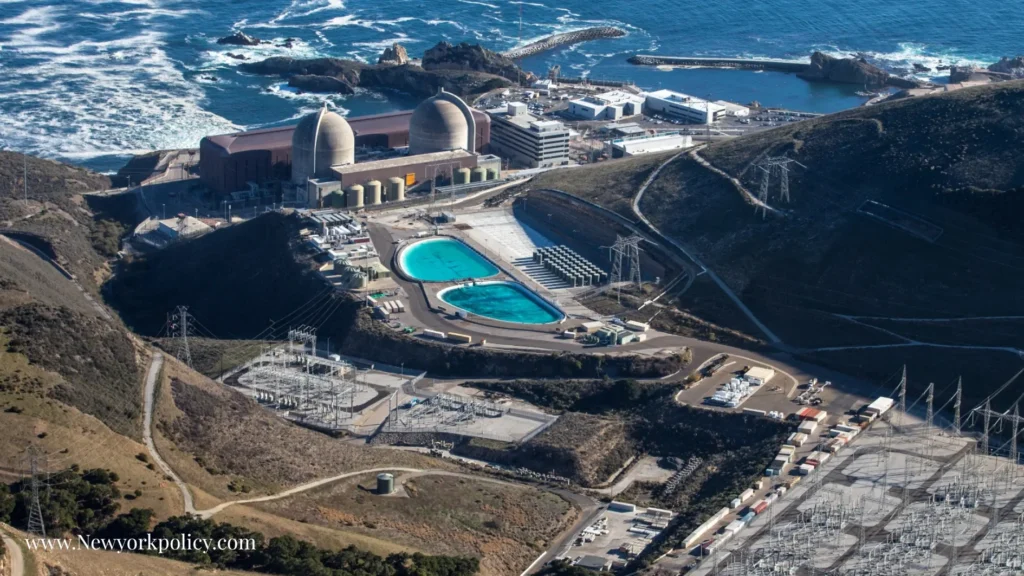
On April 2, 2026, the U.S. Nuclear Regulatory Commission approved a 20-year license renewal for both of Diablo Canyon’s reactors, extending their federal authorization to 2044 and 2045. Governor Gavin Newsom welcomed the decision, calling it a way to keep the state’s largest carbon-free power source online as demand grows and summers get hotter. But there’s a catch worth sitting with: under state law, specifically the 2022 legislation that first kept the plant alive, Diablo Canyon can only actually operate through 2030 no matter what the NRC just approved. Running it any longer than that will require the California Legislature to act again — which means the federal government has now cleared a path that state lawmakers haven’t yet agreed to walk down.
This isn’t really a rejection of solar, wind, or batteries. It’s a harder, more specific question underneath all of that: can California build a clean electricity system that stays reliable at every hour of the day without nuclear power in the mix? How that question gets answered could matter well beyond California’s own borders.
The State That Once Wanted Nuclear Power Gone
California’s relationship with nuclear energy has never been simple. Diablo Canyon was proposed back in the 1960s and didn’t start generating power until 1985 and 1987. It became the state’s only operating nuclear plant after San Onofre shut down in 2013, and for years afterward, California’s political trajectory pointed firmly toward retirement, not expansion. The plant was scheduled to close for good by the end of 2025.
Then Sacramento reversed course. Senate Bill 846, signed by Newsom in 2022, kept Diablo Canyon running through at least 2030 while regulators sorted out whether it could safely operate much longer than that. PG&E submitted its license renewal application to the NRC in late 2023, and the review dragged on for roughly three years — clearing the Coastal Commission, the Central Coast Regional Water Quality Control Board, and finally the NRC itself this April. Diablo Canyon’s two reactors were, notably, the 99th and 100th U.S. reactors to receive this kind of 20-year renewal, putting California’s lone nuclear plant in the same regulatory company as dozens of others around the country that have quietly kept running for decades longer than anyone originally planned.
None of that settles California’s own political debate. State lawmakers still have to decide how far they’re actually willing to go — and whether keeping a plant that already exists is a fundamentally different decision than approving a brand-new one.
California Has Already Built a Renewable-Energy Success Story
It’s worth being clear that the case against nuclear was never purely ideological. California has genuinely transformed its grid. Solar, wind, hydropower, and geothermal now supply a dramatically larger share of the state’s electricity than they did even five years ago, and the buildout of batteries and grid infrastructure to support all of it hasn’t slowed down.
The state’s target is enormous by any standard: a fully clean electricity system by 2045, with the California Energy Commission tracking progress toward that goal using a mix that already includes renewables, big hydropower, and yes, nuclear.
That success is exactly what makes the nuclear conversation more complicated rather than less. If solar and wind can already produce huge amounts of cheap electricity, why bother with reactors that take years and billions of dollars to build? The honest answer depends entirely on what happens on the days when the sun isn’t shining, the wind isn’t blowing, and people still need to run their air conditioners.
The Problem Isn’t Producing Clean Electricity. It’s Producing It When You Actually Need It.
This is where nuclear plays a genuinely different role than solar or wind. Panels generate electricity during the day; turbines generate it when conditions cooperate; batteries can shift some of that power to different hours, but only for so long. A nuclear reactor, by contrast, just runs — continuously, regardless of weather or time of day. Supporters call this “clean firm generation”: low-carbon electricity you can actually count on showing up, hour after hour, without qualification.
That doesn’t automatically make nuclear the cheapest option on the table. It does change what the underlying question actually is. California isn’t simply choosing between “nuclear” and “renewables” anymore. It’s trying to figure out what combination of technologies can reliably keep the lights on around the clock while still cutting emissions the way the state has promised to.
Diablo Canyon Is a Different Question Than Building Something New
One distinction matters more than almost any other in this debate: keeping an existing plant running is not the same decision as approving a new one. Diablo Canyon is already built. Its reactors are already operating. Its electricity is already baked into California’s grid, supplying power to roughly four million Californians and accounting for close to a fifth of the state’s clean-energy generation. The NRC’s review this year was about extending something that already works, not approving something new from scratch.
A new reactor is an entirely different proposition — enormous upfront capital, years of regulatory review, and a long, expensive construction timeline that has burned plenty of utilities elsewhere in the country on cost overruns. That’s a big part of why some people who’d never support building a brand-new reactor are perfectly comfortable keeping Diablo Canyon online: it’s not a question of starting from zero, it’s a question of whether to walk away from infrastructure that’s already there and already working.
There’s already a live test of where that line sits. State legislators have floated a bill that would carve out an exception to California’s long-standing moratorium on new nuclear construction — specifically for advanced reactor designs, not the massive conventional plants of the 1970s and ’80s. Whether that carve-out goes anywhere will say a lot about how far California is actually willing to move.
Electricity Prices Add Another Layer to the Debate
None of this is happening in a vacuum of cheap electricity. California’s clean-energy transition is unfolding alongside some of the highest electricity prices in the country, which puts real political pressure on lawmakers to figure out which technologies deliver reliable power without pushing bills even higher.
Critics of new nuclear construction point to exactly that — the enormous capital costs baked into any new reactor project. Nuclear’s supporters counter that walking away from an existing, already-paid-for plant could create its own expensive problem, if California has to replace dependable round-the-clock generation with a much larger buildout of renewables, storage, and transmission lines to match.
The honest version of this argument isn’t just about the price of one kilowatt-hour. It has to account for reliability, transmission capacity, storage limits, construction timelines, and the cost of simply having enough capacity on hand for the handful of days a year when demand spikes hardest.
The Waste Question Hasn’t Gone Anywhere
California’s nuclear debate still carries an old, unresolved problem: what to do with the waste. The state’s original restrictions on new nuclear construction were tied directly to the absence of a permanent federal repository for spent fuel — and that repository still doesn’t exist.
Spent fuel at Diablo Canyon continues to sit in secure, NRC-regulated on-site storage, the same arrangement in place at nuclear plants across the country, because the federal government has never solved the broader national question of where this material should ultimately go.
For nuclear’s opponents, that unresolved waste problem remains a serious reason to be skeptical of any expansion. For supporters, the conversation has increasingly shifted toward climate goals and grid reliability as the more urgent priority right now — which is itself a meaningful political change from how this fight used to be framed.
California Could Become a Test Case for the Country
California isn’t just deciding its own energy future here — other states are watching closely, for obvious reasons. If one of the country’s most influential environmental-policy states decides nuclear genuinely belongs alongside solar, wind, and batteries, that’s a real signal, not a footnote. It would suggest the old fight — whether nuclear belongs in a clean-energy strategy at all — is giving way to a more practical one: how much nuclear actually makes sense, where it pencils out economically, and which combination of technologies delivers the most reliability for the least overall cost.
New Nuclear Power Faces a Much Harder Test
Keeping Diablo Canyon running and building an entirely new generation of plants are, again, not the same fight. California lawmakers have already directed the state Energy Commission to study the feasibility of advanced nuclear technologies as part of the broader push toward the 2045 clean-energy target. That study, along with the moratorium-exception bill working its way through the legislature, could end up being the real test of where this debate actually lands.
Advanced and small modular reactor designs are frequently pitched as fundamentally different from the massive, expensive projects of past decades. Maybe they are. But promises about next-generation technology still have to survive contact with real construction costs, real regulatory timelines, and real performance data — and California has no particular reason to take “advanced” at face value just because the marketing says so. The technology will have to actually prove it can deliver.
The Real Question Is Reliability
Maybe the most interesting part of California’s nuclear reconsideration is what it reveals about how the definition of “clean energy” itself is shifting. For years, the central goal was simply replacing fossil fuels with renewable generation. Increasingly, a second requirement is impossible to ignore: that electricity has to actually be there when people need it. Homes need power at night. Factories can’t just pause when renewable output dips. Hospitals need electricity that doesn’t waver. And rising demand from EVs, air conditioning, and data centers is only going to make the reliability problem harder, not easier.
California’s challenge, in other words, has become a genuine balancing act — solar and wind for volume, batteries for shifting power across a few hours, transmission for moving electricity between regions, and nuclear for the steady baseline underneath all of it. There may not be a single technology capable of solving the whole problem on its own, and California’s own experience over the past few years is a pretty direct demonstration of exactly that.
California’s Nuclear Debate Is Really About the Future of the Grid
None of this means California has abandoned renewables — it hasn’t, and there’s no real political appetite for that to change. What’s actually shifted is that nuclear is increasingly being treated as one legitimate piece of a much larger system, rather than a technology the state needs to phase out on principle. That reframing may end up being the more important story for the rest of the country, too. Instead of asking which single technology should “win,” more states may increasingly find themselves asking which combination of technologies can deliver three things at the same time: low emissions, genuine reliability, and costs people can actually afford.
California spent decades trying to move away from nuclear power. Now it’s asking a more uncomfortable question: whether it can actually afford to move as far away as it originally planned. That may turn out to be the most consequential shift in the whole debate.
Author