AI Is Becoming a Political Test for Democrats. Do They Have a Plan?

As artificial intelligence moves from a technology story to a jobs, security, and economic issue, Democrats are being pushed to decide what they actually want Washington to do about it.
Artificial intelligence was once mostly a technology-policy story. It’s becoming something considerably bigger — a question about jobs, national security, children’s wellbeing, data centers, energy consumption, corporate power, and the shape of the American economy. That shift just landed squarely in Democratic politics.
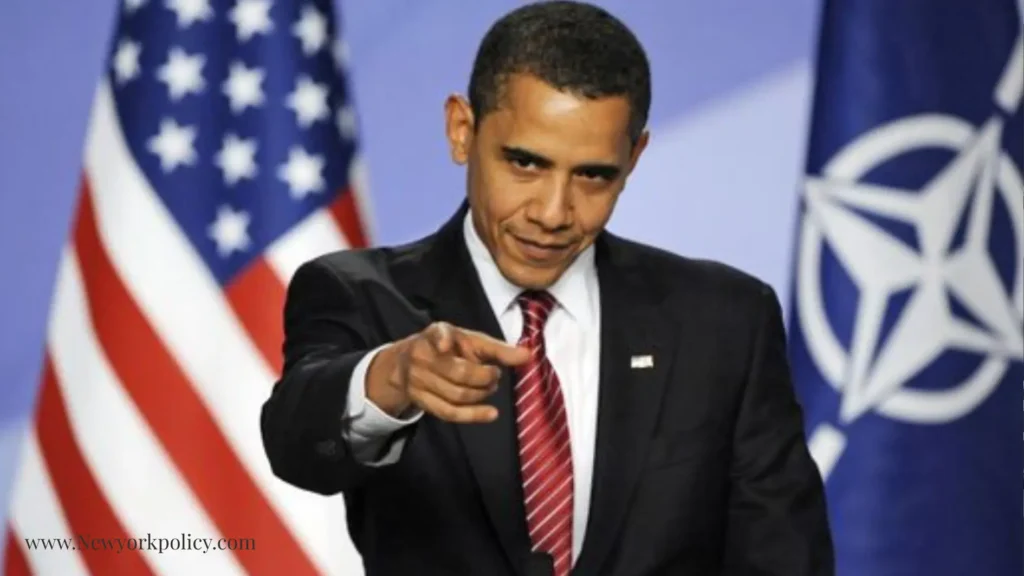
According to a New York Times report published September 13, 2026, Barack Obama told House Democratic Leader Hakeem Jeffries at a private fundraiser last Thursday that AI is “moving very fast in private hands, and if we don’t get on top of it, I think it can be dangerous.” Obama reportedly went further, urging Jeffries directly: “Once you are speaker, I would strongly urge that the Democrats put together a framework for a very public conversation” about AI policy — tying the advice explicitly to the possibility that Democrats retake the House in the November 3 midterms.
He also pushed prospective 2028 presidential candidates to develop a “very clear plan” for AI and make it one of their “central agendas,” according to a partial transcript his office provided to the Times, specifically flagging job displacement and AI’s effects on children as issues candidates need real answers on.
Obama’s message wasn’t simply “regulate AI.” It was that Democrats need an actual, coherent political framework for what they want government to do about it — and by his own account, he’s trying to stake out real middle ground rather than pick a side in the industry’s loudest argument. He described himself as neither an “accelerationist” nor a “doomer” on the technology, according to the same reporting. That may be the harder task of the two.
Washington Is Running Behind the Technology
The core problem is speed. AI companies can develop and ship new capabilities far faster than Congress typically legislates — legislation takes months or years, while frontier model capabilities can shift meaningfully within weeks. That mismatch creates an unusual policy bind: lawmakers are trying to write rules for a technology that may look different by the time those rules actually take effect.
Recent warnings from inside the industry have sharpened that pressure considerably. Obama’s own comments arrived in the same news cycle as dire public warnings from two Anthropic researchers — including one, Jacob Coxon, who resigned from the company outright — arguing that the current pace of development risks catastrophic outcomes without dramatically more caution.
Growing numbers of lawmakers from both parties have started calling for tougher AI safeguards specifically in response to those warnings. The political question is shifting as a result. It’s no longer really “should America regulate AI?” It’s increasingly “what exactly should be regulated, and how fast can that actually happen?”
Democrats Have an Opportunity — But Also a Real Problem
Obama’s intervention lands at a genuinely important moment for the party — a chance to argue government needs to get ahead of AI’s consequences before they become unmanageable. But Democrats don’t speak with one voice here. Some want substantially stronger regulation; others are closely tied to an industry pouring enormous sums into both AI development and political campaigns simultaneously.
That makes a simple “stop AI” message politically difficult to sustain — and probably rightly so, since AI isn’t purely a threat. It’s also one of the more significant technological opportunities the country has produced in a generation. The real political challenge is holding both of those truths at once, publicly, without collapsing into either extreme.
The Best Argument Is Not “Stop AI”
Obama himself seems to be trying to model exactly that balance. Refusing the accelerationist-versus-doomer framing entirely suggests a real, if not yet fully detailed, middle path: develop AI rapidly, but build rules that get proportionally stronger as systems become more capable and more consequential — covering things like security requirements, mandatory testing, transparency obligations, liability frameworks, and protections for critical infrastructure, along with clear rules for how companies must respond when their own systems demonstrate dangerous or unexpected behavior. Notably, Obama reportedly didn’t lay out specific regulatory proposals in his remarks to Jeffries — which means the framework he’s calling for still has to be built from scratch by the party he’s pushing to build it.
Jobs May Be the Political Issue That Matters Most
For most voters, though, the sharper AI question probably isn’t existential risk — it’s employment, and Obama flagged exactly that concern directly to Jeffries. The warning isn’t hypothetical anymore. In late May, Obama used his own social media following of nearly 130 million people to amplify an Axios interview in which Anthropic CEO Dario Amodei warned that AI could eliminate half of all entry-level white-collar jobs and push unemployment to 10 to 20 percent within one to five years, concentrated heavily in technology, finance, law, and consulting.
Notably, Obama paired that citation with one from an unlikely source politically: former Trump strategist Steve Bannon, who told the same outlet AI job losses would become “a major issue” in the 2028 campaign — a rare point of actual agreement across the aisle on how disruptive this could get.
That creates a real political dilemma either way. If AI makes companies dramatically more productive, the aggregate economy could grow substantially richer. But if those gains concentrate among a small set of companies and highly skilled workers while millions of employees lose bargaining power and job security, the political backlash could be severe. The Washington question isn’t simply how to preserve existing jobs — it’s how to keep AI’s economic gains from concentrating in a narrow slice of companies and investors while everyone else absorbs the disruption.
Data Centers Are Already Turning AI Into a Local Political Issue
AI is also becoming a physical, local political fight, not just an abstract software debate. Large-scale AI requires enormous data centers, which require electricity, land, water, and heavy infrastructure — and that’s already generating local backlash in the communities where new facilities are being proposed. Notably, this has started cracking the Republican coalition specifically: several 2026 GOP candidates have publicly called for limits or pauses on new data-center projects, breaking with President Trump’s broader push to expand America’s AI infrastructure as fast as possible. That creates an unusual, cross-partisan coalition — tech companies wanting more compute, national-security officials wanting to stay ahead of China, and local residents on both sides of the aisle worried about electricity prices, water use, and industrial buildout near their homes.
The China Question Complicates Everything
There’s another reason Washington is reluctant to slow AI down: China. The U.S. increasingly frames AI as part of a broader technological and geopolitical contest, and the Trump administration has consistently prioritized maintaining American leadership over regulatory caution — Trump said as recently as this past Sunday that the U.S. “must defeat China in the AI race,” reiterating his generally hands-off approach to the technology.
That produces a genuinely difficult equation: move too slowly, and China gains ground; move too fast without real safeguards, and the technology could create risks neither government nor companies are actually prepared to manage. A unilateral American slowdown is also just structurally hard to design, since AI development is a global activity that doesn’t pause because one country’s legislature does.
Republicans Are Not Completely Opposed to Action
It would be a mistake for Democrats to assume AI regulation splits cleanly along party lines. Multiple Republicans have already broken from the administration’s laissez-faire posture — the data-center pushback among 2026 GOP candidates is one clear example — and House Speaker Mike Johnson has said Congress could act if lawmakers land on concrete, workable solutions, while still voicing caution about Congress becoming the primary driver of AI rules.
That suggests the political opening here may be considerably broader than a purely partisan framing would suggest. The more useful public debate may end up being less “Democrats versus Republicans” and more “how much control should government actually exercise over a technology developing this quickly” — a divide that cuts through both parties rather than between them.
The Industry Is Starting to Ask for Guardrails Too
Perhaps the most unusual wrinkle is that prominent voices inside the industry itself are increasingly calling for more caution, not less. Anthropic’s Dario Amodei has pushed for slowing certain aspects of development; researchers at his own company have gone considerably further, with Jacob Coxon’s September resignation explicitly warning that competitive racing dynamics are outpacing safety work industry-wide.
Even Trump’s own AI adviser David Sacks, for his part, has pushed back hard against the growing chorus of job-loss and safety warnings — dismissing Obama’s comments as part of a coordinated “influence operation” aimed at expanding “Global AI Governance” — which itself shows how contested this territory has become even within the pro-AI-development camp. None of this means the industry has turned anti-AI. It means the argument for stronger safety mechanisms is increasingly coming from inside the companies building the technology, not just from outside critics — which makes it considerably harder for Washington to wave off AI regulation as simple obstruction of innovation.
Democrats Need More Than Warnings
This is exactly where Obama’s advice gets specific and demanding. Telling voters AI could be dangerous isn’t a governing platform on its own — Democrats need actual answers. Would advanced systems require independent safety testing before release? Would companies have to report serious incidents as they happen? Who’s legally responsible when an AI system causes real harm? How should workers displaced by automation actually be supported — retraining, wage insurance, something else entirely? What limits should apply to increasingly autonomous systems operating with less human oversight? How should children’s access to AI tools be handled? Who pays for the infrastructure — the data centers, the power generation — all of this requires? And, arguably the sharpest question of all: who actually captures the economic gains once productivity rises? Without real answers to these questions, AI risks becoming yet another political issue dominated by fear and vague gesturing rather than actual policy — which is precisely the trap Obama appears to be trying to steer Jeffries and the party away from.
The 2028 Campaign Could Look Very Different
Obama’s push to make AI central to the 2028 race may matter more than it sounds like on first read. Whoever runs in 2028 will inherit a debate that’s likely to be considerably more mature than today’s version. By then, voters may have direct, personal experience with AI reshaping or eliminating their own jobs. Schools may have already redesigned how they teach. Companies may have reorganized entire functions around AI tools.
Data centers may have visibly reshaped local electricity markets and prices. And governments will have several more years of both successful and failed AI policy experiments to draw on. At that point, vague appeals to “innovation” won’t cut it as a platform — candidates will need to say, specifically, what kind of AI economy they’re actually promising to build.
The Real Political Divide May Be About Control
The most consequential AI debate probably isn’t between people who love the technology and people who fear it. It’s between people who believe AI should largely develop according to market forces with minimal interference, and people who believe government needs to set real boundaries before the technology becomes too powerful or too embedded to meaningfully control.
That’s a far more consequential divide than a simple partisan split — and notably, it’s one neither party has actually resolved internally, as the Republican data-center revolt and the Democratic tension between AI-industry donors and AI-skeptical voters both demonstrate in their own ways.
America Has to Decide What Winning Means
The U.S. wants to win the AI race — but “winning” can mean genuinely different things depending on who’s defining it. It could mean building the most powerful models. It could mean creating the most valuable AI companies by market cap. It could mean maintaining a clear technological edge over China. Or it could mean building an AI-powered economy that produces broad gains without leaving millions of displaced workers behind.
Those goals don’t automatically align, and the hardest part of this whole transition may not turn out to be building increasingly powerful systems — it may be deciding what those systems should actually be allowed to do, and who bears responsibility when something goes wrong.
Obama’s warning has now put that question squarely into mainstream American politics, days before this article was even written. Democrats have to decide whether they can turn a private fundraiser’s worth of advice into an actual governing agenda before November. And Republicans, watching their own data-center coalition begin to fracture in real time, will eventually have to decide whether “move fast and beat China” is really a sufficient answer on its own.
Author