Trump Wants to Ban CNN, MS NOW and Politico From the White House. What Happens Next?

President Donald Trump says three major news organizations are barred from the White House over what he calls “fake news.” The bigger question is whether the executive branch can restrict press access based on coverage it dislikes.
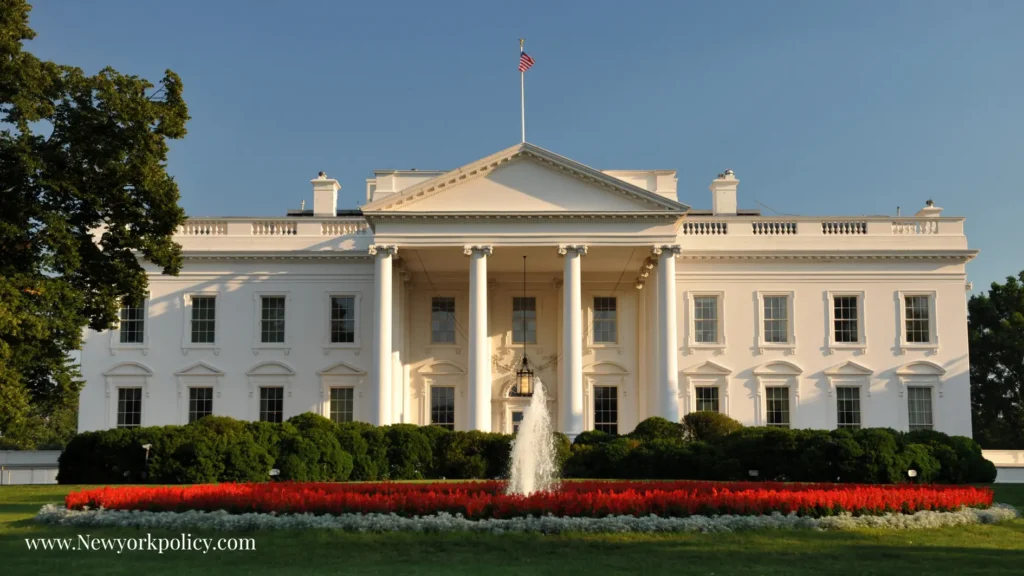
President Donald Trump announced Friday that CNN, MS NOW and Politico are barred from the White House, accusing all three of persistent “FAKE NEWS” reporting. In a Truth Social post, he called it “effective immediately,” took a jab at MS NOW over its rebrand from MSNBC, and revived a longstanding grievance about a federal subscription Politico once received — before warning that “other Fake News Media Outlets” could be next.
By Friday afternoon, none of it had actually happened. CNN and MS NOW reporters were still working from the White House press area; a CNN crew was still traveling that day as pool press with the vice president.
The White House Press Office, asked for details on how the ban would be enforced, pointed only back to Trump’s own remarks. Trump later told reporters in the Oval Office that he didn’t want the outlets in his presence “because they’re fake news,” adding that “something is wrong with a country” that allows negative coverage of a president.
That gap — a presidential declaration with no visible mechanism behind it — is the first thing worth understanding about Friday’s news. The second is the question it raises regardless of whether the ban is ever formally carried out:
Can a president deny journalists access to the White House because he believes their reporting is false or unfavorable?
The answer will likely come from the courts, if it comes at all.
The Ban Has Not Yet Been Defined
Trump declared three outlets banned without specifying whether that means pulling credentials, barring individual reporters from events, or something broader. Reporters from the affected organizations kept working at the White House after the announcement, and the outlets themselves said they’d received no formal notice.
CNN put out a statement standing behind its “fair and accurate reporting” and asserting a constitutional right to do that reporting “without hindrance.” MS NOW and Politico had no immediate comment; former White House Correspondents’ Association president Weijia Jiang responded to Trump’s post by quoting the First Amendment in full.
Until the administration acts on the threat in some concrete way — revoking a credential, physically barring a reporter — there’s no ripe legal dispute to bring to court. That is likely by design: a threat costs a president nothing, while a formal ban invites an immediate lawsuit.
Why the First Amendment Matters
The dispute isn’t about whether a given CNN or Politico story was accurate. The First Amendment protects the press from government interference — but that has never meant journalists have unrestricted access to every government building or event. Presidents can impose legitimate security and logistical restrictions on who covers them.
The constitutional problem arises when access turns on the content or viewpoint of a news organization’s coverage rather than a neutral, applied-to-everyone rule. That’s the distinction any legal challenge would be built around: is this a legitimate exercise of the president’s control over his own house, or retaliation against outlets for what they publish? Trump made that question easy to frame by tying the ban explicitly to reporting he considers false.
This Is Not the First White House Press Fight
Trump has a long history of clashing with the press over access, dating to his first term — including the 2018 revocation of CNN correspondent Jim Acosta’s credential, which a federal judge ordered restored after CNN sued. Since returning to office, his administration has escalated:
- The Associated Press was barred from the Oval Office, Air Force One, and other events in 2025 after declining to rename the Gulf of Mexico in its own copy per Trump’s executive order. That case is still in litigation.
- The White House took over selecting the presidential press pool from the White House Correspondents’ Association last year, ending a practice that had stood for decades.
- A federal judge struck down parts of the Pentagon’s press credentialing policy this year; the Defense Department replaced it with a different restrictive policy that was also blocked, though that ruling is now stayed pending appeal.
- The Treasury Department denied credentials to journalists seeking to cover a G20 meeting last month.
What’s different this time is scope: three prominent outlets named simultaneously, rather than one reporter or one wire service. CNN sits inside the traditional television pool that covers the president’s movements; Politico’s wire-style coverage of Capitol Hill and the executive branch is widely redistributed. Cutting either out of the room affects more than the bylines involved.
The White House Controls Access. The Courts May Define the Limits.
A president has substantial authority over White House operations and security, but journalists aren’t ordinary visitors — they perform a recognized public function of documenting and questioning government on the public’s behalf.
That doesn’t guarantee any individual reporter access. It does mean the reason for exclusion carries constitutional weight. Barring a reporter for a documented security issue is a different act, legally, than barring one because the government dislikes what they write — and Trump left little ambiguity about which this was.
The Fight Could Expand
Trump’s warning that “other” outlets could follow raises practical questions beyond the three organizations named: What standard would determine which outlets are excluded? Who decides whether coverage is “fake”? Can an outlet contest exclusion before it takes effect, and can a court reverse it after the fact? Press freedom groups were quick to call on affected outlets to fight any formal action — a sign that the answer to at least one of those questions (will this be challenged) is already settled.
A Larger Battle Over Government and the Media
Friday’s announcement lands amid several parallel fights. A day earlier, Disney had argued in federal court that regulatory pressure tied to ABC’s broadcast licenses should be blocked, alleging the pressure was connected to the network’s coverage of the administration; the White House and FCC haven’t accepted that framing.
Separately, the Senate Commerce Committee has advanced legislation aimed at barring federal officials from pressuring private companies to suppress protected speech, though it still needs full Senate and House approval.
Different legal vehicles, same underlying question: how much leverage should the federal government have over organizations that scrutinize it?
Accuracy and Press Freedom Are Different Questions
It’s easy to let these two questions blur in the political argument, but they aren’t the same:
Whether a specific CNN or Politico story got something wrong is a question about journalism — outlets make mistakes, get corrected, and get challenged all the time, including by the government they cover. Whether the government gets to decide which journalists are allowed to cover the president is a question about the limits of executive power. Any court case arising from this will turn almost entirely on the second question, not the first.
What Happens Now
The central unanswered question is whether the White House does anything to enforce what Trump announced. As of Friday afternoon, reporters from the named outlets were still working the beat, and the administration had described no formal mechanism.
If that changes — a credential pulled, a reporter turned away at the gate — the affected outlets have already signaled they’ll go to court, putting a judge in the position of weighing the president’s authority over his own building against the constitutional protection the press has historically been afforded in that same building.
Whatever a court eventually decides could shape how much discretion future presidents have to pick their own press corps — and whether “I don’t like your coverage” can ever be a legally sufficient reason to keep a news organization out.
For now, Trump’s announcement is clear. Its legal and practical consequences are not.
Author