A federal court in North Texas has become one of the most consequential venues in American law — and the reason has less to do with ideology than with a quirk in how cases get assigned.
WASHINGTON — When the Trump administration runs into a difficult legal fight, the outcome often hinges on something that has nothing to do with the merits of the case: where it was filed.
Over the past several years, the U.S. District Court for the Northern District of Texas has become one of the country’s most consequential venues for politically charged litigation. Conservative advocacy groups, Republican state officials, and — increasingly — the Justice Department itself have steered major cases there, often with predictable results.
At the center of that pattern is Chief Judge Reed O’Connor, a George W. Bush appointee whose courtroom has become synonymous with some of the era’s most contested legal fights, from health care to gun rights to transgender medical care.
The controversy isn’t simply that Texas has conservative judges — plenty of districts do. It’s that, in parts of the Northern District, a lawyer can know almost exactly which judge will hear a case before they even file it.
A Court Built for Predictability
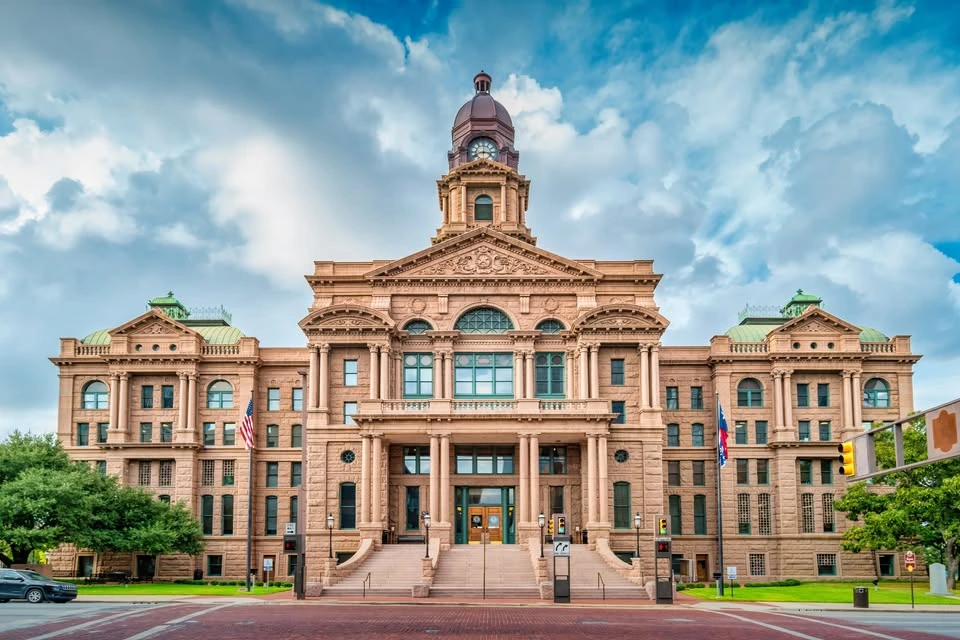
Most federal courts distribute cases randomly across a broad bench. The Northern District of Texas doesn’t. Cases are assigned based on which of the district’s seven courthouses a lawsuit is filed in — and several of those courthouses are staffed by only one or two judges.
The effect is stark. Judge O’Connor hears every single case filed in the Wichita Falls division. He also handles the bulk of the docket in Fort Worth, splitting it with fellow Trump appointee Mark T. Pittman. Three more divisions — Abilene, Lubbock, and San Angelo — funnel exclusively to another Trump appointee, Judge James Wesley Hendrix. And in Amarillo, every case goes to Judge Matthew Kacsmaryk, the judge who struck down federal approval of the abortion drug mifepristone in 2023 after the group challenging it incorporated in his district just months before suing.
Of the district’s nine active judges, eight were appointed by Republican presidents, six of them by Trump. That concentration, combined with the fact that appeals go to the Fifth Circuit — widely regarded as the country’s most conservative federal appeals court — has turned a handful of small-town Texas courthouses into a pipeline for shaping national policy.
The Judge at the Center
Reed O’Connor has sat on the federal bench since 2007, following stints as a federal prosecutor and a Senate Judiciary Committee aide to Senators Orrin Hatch and John Cornyn. In the years since, he’s built a long record of striking down federal policy whenever it collides with conservative legal principles: blocking paid family leave for same-sex couples, overturning a decades-old ban on interstate handgun sales, and voiding an Obama-era directive on transgender students’ bathroom access.
His best-known ruling came in 2018, when he declared the entire Affordable Care Act unconstitutional — a decision the Supreme Court later reversed 7–2, with even some conservative legal scholars calling it a reach. The Court has also overturned his rulings on gun regulation and on a federal law giving preference to Native American families adopting Native children.
His defenders see something different: a judge doing exactly what the job requires. Senator Cornyn has praised O’Connor’s record as principled and independent, and O’Connor himself has said his only loyalty is to the Constitution — a position he first staked out at his 2007 confirmation hearing, when Senator Sheldon Whitehouse pressed him on whether nominees sometimes disguise ideology as neutrality.
That disagreement captures a bigger national argument: are judges like O’Connor being criticized for their legal reasoning, or simply because their rulings increasingly decide major political outcomes?
The Justice Department Finds a Friendly Court
Conservative groups and Texas officials have used the district’s case-assignment rules for years. What’s new is that the federal government itself has started doing the same thing.
One case illustrates the pattern clearly. Earlier this year, the Justice Department tried to subpoena hospital records tied to an investigation into gender-affirming care for minors. Courts in Boston, Philadelphia, Pittsburgh, Los Angeles, and Seattle had already rejected or narrowed similar demands. So the department brought its case to Fort Worth instead — even though the hospital in question, in Rhode Island, doesn’t provide that care in Texas at all, since the state banned it for minors in 2023. The department argued its broader investigation was technically “based” in North Texas. Judge O’Connor agreed, and ordered the hospital to turn over patient names and Social Security numbers.
A Rhode Island judge, Mary McElroy, later pushed back hard, accusing the Justice Department of abandoning its home court for one it considered more sympathetic and calling the maneuver “dirty pool” during a hearing. An appeals court has so far let O’Connor’s order stand while arguments continue, and the hospital has begun turning over records.
The administration has used the same courthouses for fast-moving settlements, too. Last year, it sued Texas over a state law granting in-state tuition to undocumented students — a law Texas’s own attorney general, Ken Paxton, declined to defend, instead working with federal lawyers to strike it down through a same-day settlement O’Connor approved almost immediately. Months later, the two sides swapped roles: Paxton sued the federal government over an immigration rule, backed by a group co-founded by White House adviser Stephen Miller, and O’Connor signed off on that settlement just as quickly.
What “Judge Shopping” Actually Means
Judge shopping is a more precise cousin of the older practice of forum shopping, in which lawyers pick a court or region seen as generally favorable to their case. What sets parts of North Texas apart, legal scholars say, is that litigants aren’t just choosing a friendly region — they’re choosing a specific, predictable judge.
Political scientist Kevin Wagner of Florida Atlantic University has described this as the difference between a “favorable” venue and a truly “predictable” one. And while both political parties have long sought out sympathetic courts, critics argue that few systems make it as easy to guarantee a particular judge’s name on the docket as North Texas does.
A System Under Fire — That Survived Anyway
The complaints aren’t new, and they aren’t partisan. A 2021 study found that a fifth of all U.S. patent lawsuits were being funneled to a single judge in the Western District of Texas, prompting a bipartisan letter from Senators Thom Tillis and Patrick Leahy — concerns later echoed by Chief Justice John Roberts.
In 2024, the Judicial Conference of the United States — the federal judiciary’s policy-making body — issued guidance urging courts to randomly assign cases involving major national policies, specifically to curb judge shopping and shore up public confidence.
The guidance wasn’t binding, and the Northern District of Texas declined to adopt it. O’Connor later criticized the push in a speech to the Federalist Society, calling it hypocritical given what he described as forum-shopping by the Biden-era Justice Department, and framing the pressure as an attack on judicial independence from outside political critics.
Retired federal judge Nancy Gertner, now at Harvard Law, has argued the opposite: that assigning cases by geography rather than by random draw undermines the appearance of impartiality — and that clear, fair assignment rules matter more than ever given how politically charged attacks on the judiciary have become.
A Pipeline to the Supreme Court
North Texas’s influence is amplified by its place in the appellate pecking order. Rulings from the district routinely land before the Fifth Circuit, which has upheld many of O’Connor’s most contested decisions even as the Supreme Court has reversed others — on the Affordable Care Act, gun regulation, and Native American adoption law, among them.
Legal scholars including Miles Armaly of the University of Mississippi and Alexander Gouzoules of the University of Missouri argue that this combination — a predictable trial judge plus a receptive appeals court — is what makes North Texas uniquely attractive to litigants chasing unusual outcomes, even after a Supreme Court ruling last year narrowed judges’ power to block policies nationwide. The tools available to litigants changed, Armaly has noted; the underlying strategy didn’t.
The Bigger Question
This debate is bigger than any one administration, judge, or state. It’s a question about whether the federal court system can maintain public trust once political organizations start treating judicial districts as strategic territory rather than neutral forums.
Defenders of the current rules note that plaintiffs have always been free to choose a legally appropriate venue, and that judges shouldn’t be penalized simply because their legal philosophy is well known. Critics counter that when the outcome of a “predictable” courthouse becomes part of the pitch, the system stops functioning as a neutral arbiter and starts functioning as a tool — one available to whichever side files first and picks well.
With immigration policy, health care regulation, gun rights, and federal agency power increasingly funneled through a handful of small Texas courthouses, the seemingly technical question of how a judge gets assigned may end up shaping just as much national policy as the rulings themselves.
Author