A congressional stock-trading ban has broad public appeal, but the president remains outside the House measure — and Republicans have already voted down an amendment that would have closed that gap.
Elected officials should not be able to use public office to enrich themselves through the stock market. Few political ideas command as much bipartisan agreement.
But Washington is now confronting an awkward contradiction: the president is pushing Congress to adopt that principle for lawmakers while remaining exempt from it himself.
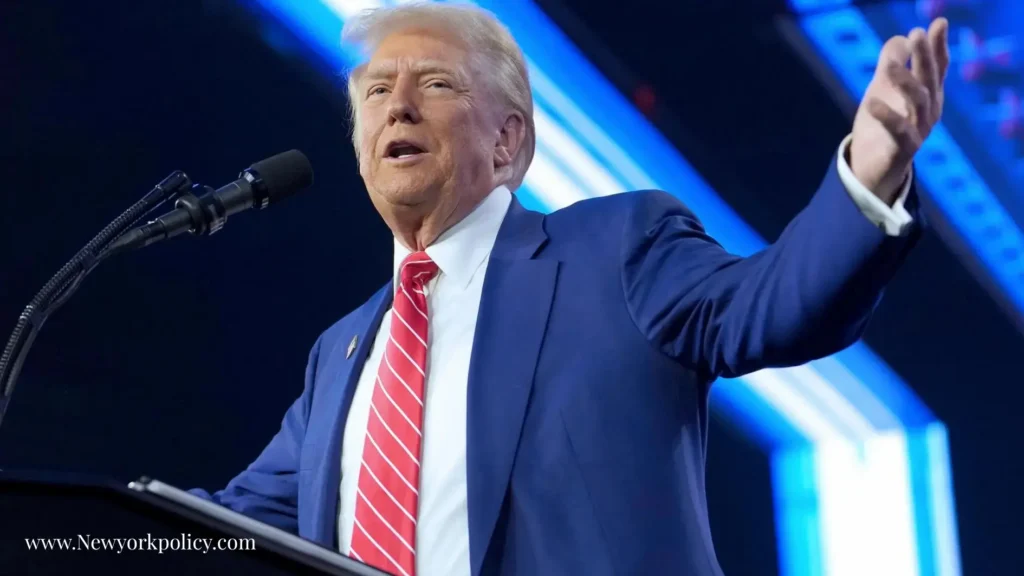
President Trump’s own trading activity is what has made the contradiction impossible to ignore. Financial disclosures reviewed by Bloomberg show he made more than 21,000 securities trades in his first year back in office, followed by another 3,700-plus trades in the first quarter of 2026 alone — a pace that at times topped 80 trades per market day. By his own account, the trades are executed automatically by outside managers using algorithmic, index-linked strategies, not directed by him personally.
That distinction matters. It also isn’t the whole story.
Congress Moves, but Leaves an Exemption in Place
In July, the House passed the Stop Insider Trading Act, H.R. 7008, barring members of Congress, their spouses and their dependent children from buying new individual stocks, while requiring advance notice before selling ones they already hold. It passed 232-198, with thirteen Democrats joining a unified Republican caucus.
Trump has publicly backed the idea that lawmakers shouldn’t profit from information they gain through office. But when Democrats on the House Rules Committee offered an amendment extending the same restrictions to the president, vice president and cabinet, it was rejected, 4-8, on a party-line vote.
Republicans also attached an unrelated voter-ID bill to H.R. 7008 before sending it to the floor — a pairing that turned what began as a bipartisan ethics push into a more partisan vote. And Trump has already signaled he would veto any version of the bill that reached beyond Congress to limit his own investing.
Put plainly: lawmakers had the chance to write a rule that applied to everyone with the power to move markets from the Oval Office, and chose not to.
The President’s Leverage Over Markets Is Bigger Than Any One Lawmaker’s
A member of Congress can vote on legislation. A president can reshape tariffs, impose sanctions, redirect energy policy, launch technology and defense initiatives, and issue executive orders that reorder entire industries overnight — often with a single public statement.
That asymmetry of power is exactly why the ethics case is arguably stronger for the president, not weaker. A conflict of interest doesn’t require proof of insider trading on classified information; the mere appearance of one, sustained long enough, is corrosive to public trust on its own.
Independent Management Doesn’t Erase the Question
The White House says Trump’s portfolio is run by outside institutions through computer-driven model portfolios, with neither Trump nor his family choosing individual trades. If true, that’s a meaningfully different situation than a president personally ordering a purchase ahead of a policy announcement.
But it sidesteps a more basic question: should a sitting president be holding a large, actively traded stock portfolio at all, regardless of who pulls the trigger on each trade? Even a fully automated system still profits or loses based on the same policy decisions the president is making. The public doesn’t need evidence of a phone call to a broker to wonder whether that’s too close a fit.
What the DoorDash Episode Actually Shows
In April, Trump purchased as much as $1.38 million in DoorDash stock. Weeks later, a DoorDash driver delivered McDonald’s to the Oval Office as part of a staged event promoting his “No Tax on Tips” policy — a tax break that flows directly to DoorDash’s driver workforce. DoorDash shares had their best trading session in nearly two months that day.
None of this proves Trump’s holdings shaped the timing of the event, or vice versa. But it’s a clean illustration of the perception problem: when a president holds a stake in a company and then stages a photo-op promoting a policy that benefits that same company’s workforce, the public has no way to know whether the two are connected — and the rules currently don’t require that separation to exist in the first place. That’s the actual function of ethics law: not just to catch corruption after the fact, but to remove the doubt before it can form.
Even the Congressional Ban Is Narrower Than It Sounds
H.R. 7008 is sometimes described as a full stock-trading ban for Congress. It isn’t. It stops new individual-stock purchases, but members can keep everything they already own, sell existing holdings with advance notice, and reinvest dividends automatically. It says nothing about private-company holdings in firms like SpaceX or OpenAI, and — as noted — it doesn’t touch the president or vice president at all.
That gap is why the bill split largely along party lines even before it reached the Senate, and why the more basic question sits unresolved: is this legislation genuinely trying to separate public power from private profit, or is it primarily a way to turn congressional trading into a campaign talking point while leaving the presidency untouched?
A Politically Convenient Half-Measure
Stock trading is a potent issue precisely because voters already distrust Congress, and a ban lets lawmakers cast themselves as reformers. But that framing collapses the moment the same standard isn’t applied to the one official with the broadest ability to move markets.
If trading individual stocks while holding public power is the problem, the president’s title doesn’t make the conflict disappear — it makes the stakes larger. Saying the portfolio is “independently managed” answers a narrower question than the one actually being asked.
The STOCK Act Already Tried This, and Fell Short
Congress isn’t starting from zero. The 2012 STOCK Act already barred officials from trading on material nonpublic information gained through their positions. In over a decade, enforcement and disclosure requirements have both been criticized as too weak to matter.
H.R. 7008 represents a real shift in approach — from after-the-fact disclosure toward upfront prevention. That shift is worth taking seriously. But if prevention is the right standard for a member of Congress, it’s not clear why the reasoning stops at the White House gates.
The Case for Consistency — and Its Limits
It’s worth acknowledging the strongest version of the counterargument. A sitting president overseeing a large, pre-existing investment portfolio faces a genuinely harder divestment problem than a first-term House member: liquidating substantial holdings on a compressed timeline can itself move markets, and the presidency already carries distinct accountability mechanisms — elections, impeachment, intense press scrutiny — that don’t apply the same way to individual lawmakers. Those are real structural differences, not just talking points.
They don’t fully answer the question, though. Qualified blind trusts and diversified-fund requirements exist precisely to solve the divestment-timing problem without demanding an overnight fire sale, and past presidents have used comparable structures.
The accountability argument also cuts the other way: if elections and impeachment were sufficient checks on presidential conflicts of interest, there would be little reason for financial disclosure requirements to apply to the president at all — yet they already do, which suggests Congress has long treated the presidency as needing added transparency, not less.
This Shouldn’t Depend on Which Party Holds the White House
Imagine a future Democratic president holding a large, actively traded portfolio while making calls on technology, pharmaceutical, energy and financial policy. It’s hard to picture Republicans accepting “independently managed” as a sufficient answer. If that’s true, Democrats should be equally unwilling to accept it now — and vice versa the next time the shoe is on the other foot. Ethics rules that only apply to the other party’s president aren’t ethics rules; they’re campaign material.
What a Consistent Standard Could Look Like
A coherent system would apply comparable restrictions — not identical mechanics, but comparable intent — to the president, vice president, cabinet officials and members of Congress alike: diversified funds, qualified blind trusts, or similar structures that meaningfully separate policymaking from individual stock positions.
The goal isn’t to stop public officials from building wealth. It’s to make sure the public never has to guess which came first — the decision or the position.
The Real Stakes Are Bigger Than Trading
Nobody needs to believe every official who owns a stock is corrupt for this to matter. What’s needed is confidence that public power isn’t being converted into private gain — and that confidence depends on rules that don’t rely on everyone involved being perfectly trustworthy.
Trump put congressional stock trading on the national agenda. Congress responded with legislation. But the House also had a direct chance to close the gap at the top of the ballot and voted it down, 4-8, along party lines.
That’s not an accusation. It’s a fact about how the vote went — and it means the core question is still open: if trading individual stocks while wielding public power is dangerous enough to restrict for 535 members of Congress, why does the restriction stop just short of the one official with the most power to move the market?
Author