California is moving toward the nation’s first formal standards for wildfire smoke damage, exposing a growing problem for homeowners, insurers, and communities facing more destructive fires.
The House Is Still Standing. So Why Can’t You Go Home?
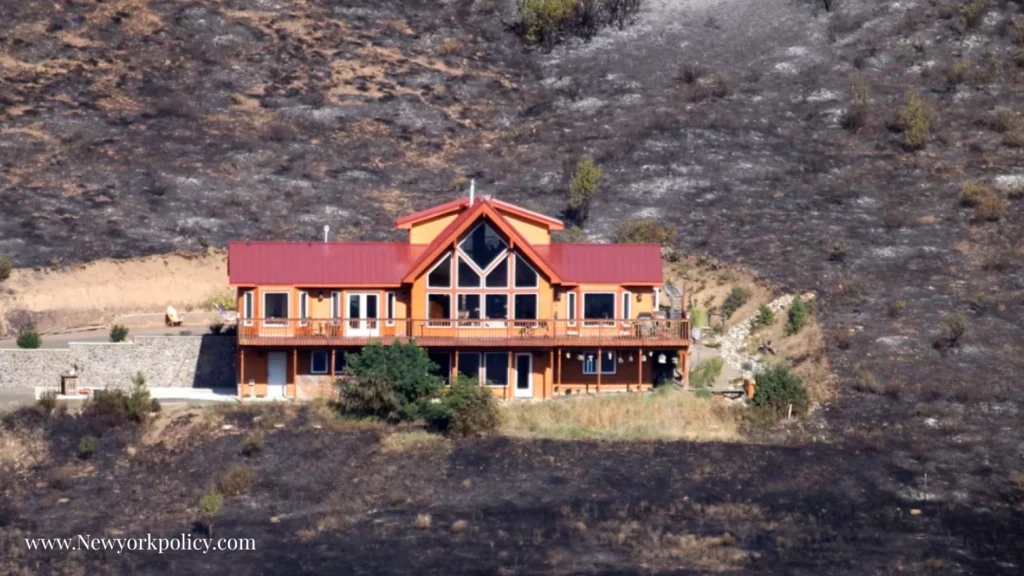
When people picture wildfire destruction, they usually imagine homes reduced to ash. Some of the hardest cases are far less visible than that. A house can survive the flames entirely and still become unsafe to occupy — smoke, soot, ash, and combustion residues can penetrate walls, insulation, carpets, ventilation systems, and personal belongings. After a major wildfire, the question stops being simply whether a structure burned. It becomes: is this house actually safe to live in?
California lawmakers just answered that question with legislation, not just a proposal. On the night of September 1, 2026, the state legislature passed two companion bills — AB 1642 and AB 1795 — that would create the country’s first formal, statewide standards for testing and cleaning wildfire-smoke-damaged homes and require insurers to follow them.
Governor Gavin Newsom has until September 30 to sign both; if he does, California becomes the first state in the nation with an enforceable framework specifically built around this problem. According to Amy Bach, founder of the consumer advocacy group United Policyholders, only Colorado has pursued anything comparable, and its effort remains a work in progress — meaning California would very likely finish first regardless of who started earlier.
The significance reaches well beyond California’s borders. As wildfires become a recurring, escalating threat across the American West, the working definition of “disaster recovery” may need to expand along with them.
The Invisible Damage Left Behind
The January 2025 Eaton and Palisades fires in Los Angeles County showed the scale of this problem starkly. Those fires — among the deadliest and most destructive in California history — destroyed more than 16,000 structures and killed 31 people, burning for nearly a month. But remarkably, roughly one of every two homes inside the designated fire perimeter was left standing, many of them contaminated by smoke rather than destroyed outright.
California’s insurance department estimates more than 13,000 of the roughly 40,000 claims filed involved smoke damage specifically. Debris and emissions from the fires contained a mix of trees, brush, and manufactured materials — plastics, metals, and more — raising real concerns about what toxic residue those materials left behind inside otherwise-intact homes.
Some residents, like Gil Barel, a Pasadena renter profiled in CalMatters’ coverage of the bills, are still waiting — as of this August, some 20 months after the Eaton Fire, Barel and her family remained unable to move back into the duplex they’d rented for eight years, still waiting for confirmation the home was actually free of toxic material. Ash and soot remain inside these homes. Smoke odors persist.
Residents face open questions about lead and asbestos contamination specifically, since both are common components of wildfire ash. Testing, cleanup, and insurance disputes have stretched on for well over a year in many cases, creating a genuinely strange category of disaster victim: the homeowner who still technically has a house, but can’t safely live in it.
The Insurance Problem
Wildfire insurance has traditionally revolved around obvious, visible destruction. Smoke damage breaks that model entirely — how much testing is actually necessary, who decides whether a home is contaminated, which pollutants get measured, what level counts as acceptable, and who pays for testing and remediation in the first place? Without clear standards, those questions have repeatedly turned into disputes between homeowners, contractors, environmental specialists, and insurers, often dragging on for months or years.
California’s new legislation attempts to close that gap directly, through two bills that were originally in tension with each other before being reconciled. AB 1642, authored by Assemblymember John Harabedian (D-Pasadena), directs the state’s Department of Toxic Substances Control to develop binding regulatory standards for detecting and removing lead and asbestos by the end of 2028, with standards for additional contaminants — including heavy metals, cyanide, lithium, and beryllium — required by the end of 2029.
Its companion, AB 1795 (the Smoke Damage Recovery Act), authored by Assemblymember Mike Gipson (D-Carson) alongside Insurance Commissioner Ricardo Lara, creates a legal presumption that when ash, soot, char, or other combustion byproducts are found in a standing home after a wildfire, the resulting damage is presumed to have come from that wildfire for insurance purposes — shifting a real evidentiary burden away from homeowners.
It also requires insurers to inspect affected properties within 30 days of a claim and cover the cost of testing needed to confirm a property has genuinely been restored to its pre-loss condition. Both laws only take effect if Newsom signs both bills together.
That presumption alone could meaningfully shift the balance of power between homeowners and insurers, who have historically been able to demand homeowners prove contamination occurred before covering remediation costs.
Why the Dispute Has Become So Bitter
For displaced families, this isn’t an abstract regulatory debate — it’s been a genuinely bitter fight, and the legislative process reflected that bitterness directly. Advocacy group Eaton Fire Residents United described an “eleventh-hour sprint of sleepless nights” and “five-hour Zooms,” requiring direct intervention from the governor’s office, before the two originally conflicting bills could be brought into alignment.
The insurance-focused bill, born out of a Department of Insurance task force, was initially criticized by survivor groups for leaving insurers too much room to deny claims and placing the burden of proof on homeowners — concerns that shaped the final negotiations directly.
The financial toll on individual families has been severe. Reporting on the bills describes homeowners who paid $3,000 to $6,000 out of pocket for independent environmental testing after their insurers declined to cover it — testing that, in multiple cases, found significant contamination and confirmed the presence of asbestos.
The timing of the legislative push wasn’t coincidental, either: just two days before the bills passed, Los Angeles County sued State Farm directly over its handling of smoke damage claims, alleging the insurer had been improperly cutting off additional living expense payments to displaced families even as their homes remained uninhabitable — with families in the LA rental market reportedly facing $4,000 to $8,000 a month in temporary housing costs while their disputes dragged on.
The wildfire, in other words, doesn’t necessarily end when the flames go out. For some homeowners, the second disaster begins afterward, and it can be nearly as expensive as the first.
California Is Testing a New Model
This legislation reflects a genuine shift in how governments are starting to think about disaster recovery generally. Historically, disaster policy has focused overwhelmingly on rebuilding physical infrastructure — the assumption that recovery means replacing what burned. Increasingly, recovery also has to account for environmental contamination in structures that never burned at all, prolonged insurance litigation, extended temporary housing needs, and long-term health uncertainty.
California’s approach tries to get ahead of that reality by establishing rules before the next major fire creates another identical wave of confusion and dispute — which is precisely why Harabedian said he hopes the legislation becomes a model other states can adopt directly, rather than each state relearning the same lessons independently after its own disaster.
But there’s an important caveat built into the timeline itself: DTSC’s core lead-and-asbestos standards aren’t due until the end of 2028, and its broader contaminant standards not until 2029 — meaning the framework won’t be fully operational for years, even with the bills signed now. Creating a standard on paper is not the same thing as having one enforced and functioning during the next major fire season.
The Science Will Matter
Insurance industry representatives have opposed aspects of the bills while acknowledging they establish a workable framework, arguing consistently that whatever final standards emerge need to stay grounded in defensible science rather than precaution alone.
That’s a legitimate concern worth taking seriously on its own terms — the goal can’t simply be declaring every smoke-exposed home automatically contaminated, and insurers shouldn’t be able to dismiss genuine contamination concerns just because a structure happens to still be standing.
The real challenge is building scientifically defensible thresholds for testing, cleanup, and safe reoccupation — which will require credible environmental standards, properly qualified inspectors, and transparent procedures throughout. The legislation points toward established industry frameworks like AIHA’s technical guidance and the IICRC’s S700 restoration standard as reference points, giving DTSC an existing scientific foundation to build from rather than starting entirely from scratch.
The Enforcement Question
Legislation alone doesn’t solve the deeper question of who actually ensures the rules get followed in practice. One claims adjuster quoted in coverage of the bills questioned directly whether the eventual standards will be specific enough, and warned that both insurers and homeowners could try to use whatever final rules emerge to strengthen their own legal positions in future disputes rather than resolve them.
That concern shouldn’t be waved away — insurance disputes frequently end up in litigation precisely because underlying standards are ambiguous enough to argue about in either direction.
If California wants this system to genuinely reduce lawsuits rather than simply relocate them to a new legal battleground, the eventual regulations will need real precision: meaningful deadlines, understandable testing requirements, explicit assignment of who pays for what, and a practical path for homeowners to challenge an insurer’s decision without years of litigation standing between them and their own home.
The Property-Value Problem
There’s also a longer-term economic consequence that’s gotten less attention throughout this debate. A home affected by wildfire smoke may carry damage that isn’t visible even after remediation is complete.
Even following cleaning and repairs, prospective buyers may reasonably wonder: was the contamination fully removed? Was insulation actually replaced, or just cleaned? Were ventilation systems properly serviced? Was asbestos ever found, and if so, fully remediated? Were the environmental tests rigorous, or minimal? A property associated with a major wildfire could carry a real stigma long after the visible smoke damage itself has been addressed — meaning California’s housing market may eventually need not just a system for cleaning contaminated homes, but a reliable way to document and verify that the cleaning actually happened to a defensible standard. Reliable, standardized records could ultimately matter as much to a home’s resale value as the physical remediation work itself.
The Problem Is Bigger Than California
California’s experience matters well beyond its own borders because the underlying problem isn’t remotely unique to California. Wildfire risk extends across large portions of the American West, and more communities are confronting fires capable of destroying entire neighborhoods every fire season.
Smoke damage therefore has real potential to become a genuinely national insurance issue rather than a California-specific one. If California’s new standards work as intended, other states — Colorado already in early motion, per Amy Bach — could adopt comparable frameworks relatively quickly by building on California’s groundwork rather than starting from zero. If they don’t work, insurers and homeowners elsewhere will keep facing the exact same uncertainty California just spent nearly two years fighting through, one wildfire at a time.
Disaster Recovery Needs a New Definition
The old mental model of disaster recovery is simple: the fire burns, firefighters leave, rebuilding begins. Reality, as the Eaton and Palisades fires demonstrated at real scale, is considerably more complicated. A wildfire can leave behind homes that are structurally intact but environmentally compromised in ways that take months or years to resolve.
It can generate protracted insurance litigation and lawsuits like LA County’s against State Farm. It can force families into extended temporary housing while they continue paying mortgages on properties they legally cannot occupy. Recovery, in other words, can no longer be measured solely by how many buildings are still standing after a fire — it has to account for whether people can actually, safely return to them.
The Bigger Lesson for America
California’s smoke-damage standards represent something more than a routine set of insurance regulations. They’re a formal acknowledgment that modern wildfires produce categories of damage that older disaster-response rules were never built to handle.
The task now is making this new system both scientifically rigorous and practically workable: homeowners need real protection from unreasonable delays and denials, insurers need clear and scientifically defensible rules they can actually apply consistently, regulators need sufficient authority and resources to enforce standards that won’t be finalized until 2028 and 2029, and communities need a system that’s ready before the next catastrophic fire — not one still being built in its aftermath, the way this one largely was.
The most important question may ultimately come down to something simple: when a wildfire leaves a house standing, will America have a reliable way to determine whether it’s genuinely a home again? California, with Newsom’s signature still pending before his September 30 deadline, is trying to be the first state in the country to answer that question with an actual legal framework rather than case-by-case disputes.
Author