Washington’s new Venezuela oil agreement could reshape the energy relationship between the United States and South America. But controlling oil reserves is easier than turning them into immediate economic and geopolitical power.
For years, Venezuela’s enormous oil reserves have been both an opportunity and a problem for the United States. The country holds some of the largest proven reserves on Earth, yet years of political turmoil, underinvestment, and collapsing production have left much of that resource sitting untapped underground.
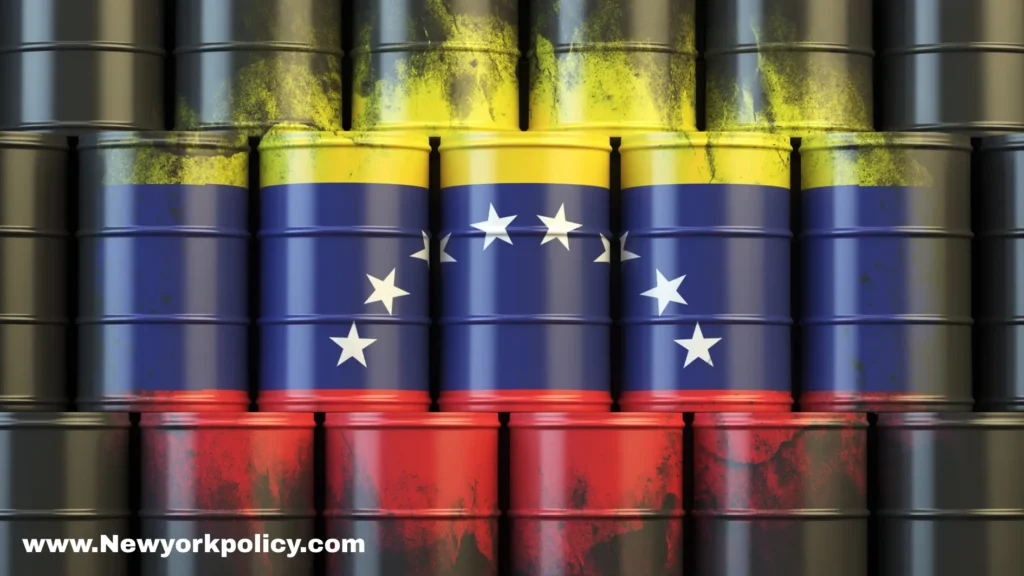
Now Washington is trying to change that — and it’s doing so under extraordinary circumstances. The deal was struck less than eight months after U.S. forces captured Venezuelan President Nicolás Maduro in a nighttime raid on January 3, 2026, and flew him to New York to face federal drug trafficking charges. His vice president, Delcy Rodríguez, was installed as acting president by Venezuela’s Supreme Court within days. On August 29, President Trump announced on Truth Social what he called “the biggest oil deal in world history”: a sweeping arrangement giving the United States a direct financial and governance stake in Venezuela’s oil sector, in exchange for a promise of major new investment and, Trump has suggested, lower prices at the pump for Americans.
But beneath the headline numbers lies a harder question: what does the U.S. actually gain from this arrangement — and how solid is the ground it’s standing on?
The Deal Is About More Than Oil
The agreement goes well beyond an ordinary foreign energy investment. Under its terms, a company called North American Blue Energy Partners, or NABEP — already Venezuela’s second-largest private oil producer — received 100-year concessions covering 17 oil fields holding roughly 65 billion barrels of proven reserves, many of them fields the White House says were previously controlled by Russian or Chinese firms. NABEP will run day-to-day operations, but the U.S. government will hold rights to a 35 percent equity stake in the company through the Department of War’s Office of Strategic Capital, plus the right to buy 20 percent of its output at production cost and first refusal on the rest. Secretary of State Marco Rubio called it “a huge win for both the American and Venezuelan people.” (KSAT/AP)
That combination — private operator, government equity, preferential purchase rights, and century-long concessions — makes this something more than a company investing abroad. It gives Washington a direct, structural interest in another country’s energy sector, and that strategic position may end up mattering more than the oil itself.
Venezuela Could Become a Strategic Energy Partner — If the Money Shows Up
The Trump administration argues the deal can rebuild Venezuela’s badly damaged oil industry. NABEP has pledged to invest close to $100 billion in Venezuelan oil infrastructure, and the arrangement is projected to generate more than $209 billion in tax revenue for the Venezuelan state over time. NABEP’s CEO, Alejandro Betancourt, has a track record to point to: over roughly two years and about $1 billion in company-funded investment, he took the company’s output from around 18,000 barrels a day to more than 200,000, making it Venezuela’s second-largest producer behind Chevron. The company says it wants to push production above 1 million barrels a day by expanding operations in Lake Maracaibo and the Orinoco Belt. (Morningstar/PRNewswire)
For Caracas, the appeal is straightforward: more investment could mean higher output, rebuilt infrastructure, new government revenue, and thousands of jobs. For Washington, the calculation is different — a revived Venezuelan oil sector would give the U.S. another major crude source close to home, reducing its reliance on supply from more distant and unstable regions at a moment when energy security is again a front-and-center issue in American foreign policy.
More Reserves Doesn’t Mean Cheaper Gas Tomorrow
This may be the most important distinction in the entire deal. Sixty-five billion barrels in the ground is not the same as sixty-five billion barrels flowing to market. Much of Venezuela’s oil infrastructure has suffered years of neglect, and NPR has reported that energy analysts see no realistic path to meaningfully higher output on anything close to a fast timeline — meaning American drivers shouldn’t expect this deal to move gasoline prices any time soon, whatever the White House’s framing suggests. (NPR) Bringing new Venezuelan crude to market requires drilling, pipeline and port infrastructure, transportation, and refinery capacity that doesn’t yet exist. Whatever strategic value the deal delivers will likely show up years before any economic benefit reaches an American gas pump.
Washington Is Also Competing With Russia and China
There’s a geopolitical layer to this beyond energy economics. Venezuela has long maintained close ties with Moscow and Beijing, and the White House says a number of the fields now folded into NABEP’s concessions were previously controlled by Russian or Chinese interests. Seen that way, the deal serves several goals at once for Washington: securing Western Hemisphere energy supply, displacing Russian and Chinese footholds in Venezuela, pulling private capital into the country’s oil sector, and tightening the U.S.-Caracas relationship generally. The oil is valuable. The strategic position that comes with controlling it may be worth even more.
The Political Risk May Be Bigger Than the Energy Risk
The biggest uncertainty here isn’t whether Venezuela can eventually pump more oil — it’s whether the political foundation underneath the deal will hold. The agreement was signed with Rodríguez’s government, and its legitimacy is already contested. Rodríguez was never elected; she assumed the presidency by a Venezuelan Supreme Court order after Maduro’s capture, and for months afterward continued to call Maduro the country’s “legitimate president” in interviews, even as she negotiated with Washington. Secretary Rubio himself said in the weeks following Maduro’s ouster that he didn’t consider Rodríguez’s government legitimate, given Venezuela’s history of elections widely regarded as neither free nor fair.
That contested legitimacy has fueled sharp criticism of the deal from multiple directions inside Venezuela. Harvard economist Ricardo Hausmann, a former Venezuelan planning minister, called the arrangement unconstitutional, arguing Rodríguez’s interim government has no authority to sign away long-term control of the country’s oil and predicting that “no major U.S. oil company will take it seriously because they know it will not last.” Opposition leader María Corina Machado went further, describing Rodríguez as one of the architects of the very Maduro-era repression the U.S. says it’s trying to move past. Rodríguez has pushed back on the sovereignty concerns directly, insisting Venezuela “retains ownership and sovereignty over its resources.” (Fortune)
Oil concessions like this one are meant to last a century. Governments — in Caracas and in Washington — change far faster than that. A future Venezuelan government could challenge the deal’s terms outright; a future American administration could take a very different approach to Venezuela altogether. The longer these concessions are meant to run, the more the whole arrangement depends on a degree of political stability that, right now, doesn’t obviously exist.
The Real Test Will Be Production
The numbers involved are enormous: 65 billion barrels, up to $100 billion in pledged investment, a century of concessions, direct U.S. government equity. But the deal’s ultimate success will be measured by something much simpler — how many additional barrels Venezuela actually pumps out of the ground. If the investment materializes and production climbs the way NABEP projects, Washington gains a genuine long-term energy partner and Venezuela gains a real source of capital. If production stalls — as it has for most of the past two decades — the arrangement risks becoming an expensive, politically fraught commitment whose biggest benefits never move past the press release stage. The next few years of drilling reports will matter far more than this week’s announcement.
A New Model for American Energy Power?
The Venezuela deal may also point to something bigger than a single foreign-policy decision. For decades, U.S. energy policy leaned heavily on boosting domestic production. This approach is broader: it treats foreign energy resources not just as commodities to be purchased on the open market, but as strategic assets worth directly holding a stake in — alongside other recent moves, including reported White House interest in Venezuela’s gold and critical mineral reserves and plans to route Venezuelan oil revenue through U.S. Treasury-controlled accounts. (RT/Bloomberg)
If the model works, it could become a template for how Washington engages other resource-rich, politically unstable countries in its own hemisphere. If it doesn’t, critics will have a ready-made example of how far political leverage over foreign resources can outrun what that leverage can actually deliver.
The Bigger Question for America
The Venezuela deal is ultimately about more than Venezuela. It’s a live test of a broader question: does the United States want to keep buying energy on the open global market, or does it want direct, structural control over the supply chains and resources that underpin its economic and national security?
The answer, at least for now, looks clear. Washington isn’t stepping back from the global energy market — it’s trying to gain more leverage inside it. Venezuela offers an extraordinary opportunity because of the sheer size of its reserves and its proximity to the United States. But opportunity isn’t the same as success. Turning tens of billions of barrels underground into durable economic and strategic advantage will take sustained investment, years of production growth, and — the hardest part — a degree of political stability that a government installed after a military capture, run by a leader whose own legitimacy is openly disputed, cannot yet guarantee.
Washington has secured a major position in Venezuela’s oil future. Whether it can turn that position into lasting American advantage is still very much an open question.
Author