The administration says it wants clearer rules and less regulatory red tape. Environmental groups warn that narrowing federal jurisdiction could leave millions of acres of wetlands outside the Clean Water Act’s protections.
A major battle over America’s wetlands is entering a new phase.
The Trump administration has proposed another change to the federal definition of which waterways and wetlands fall under the Clean Water Act, potentially narrowing the reach of federal environmental regulation across the country. The Environmental Protection Agency and the U.S. Department of the Army announced the supplemental proposal on September 4, seeking public input on additional ways to define which waters should remain under federal jurisdiction.
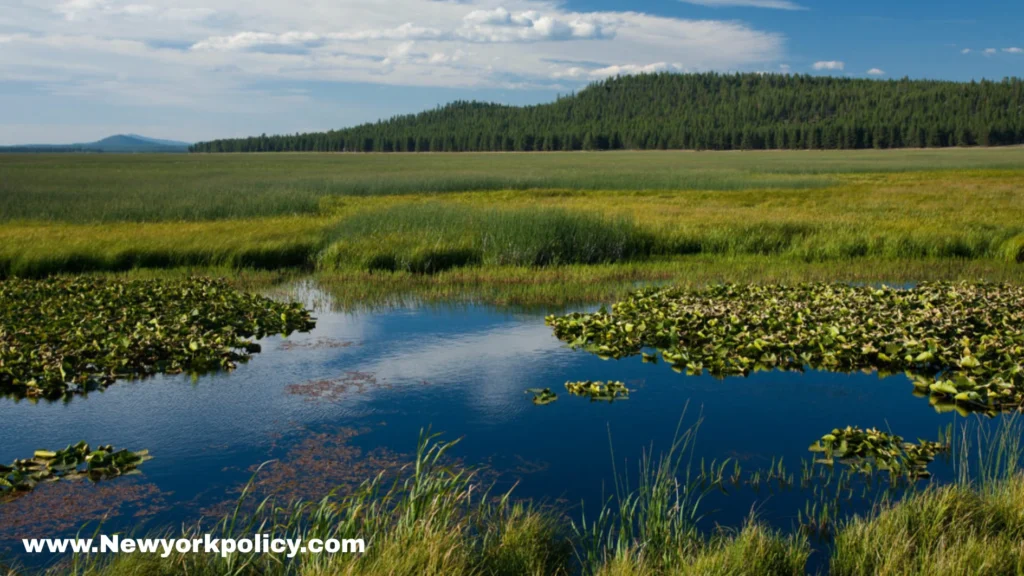
The agencies say the goal is a clearer, more durable regulatory framework in the wake of a major Supreme Court decision — one that reduces uncertainty for farmers, ranchers, developers, businesses, and landowners. Environmental groups see something very different: a potentially dramatic reduction in federal protection for wetlands that play a real role in water quality, flood control, and wildlife habitat.
The dispute is about far more than a technical definition. It’s ultimately about how much authority the federal government should have over America’s water resources.
What Is Changing?
The Clean Water Act doesn’t protect every body of water in the country the same way. A central question is whether a given water qualifies as “waters of the United States,” commonly shortened to WOTUS — a definition that determines whether certain federal Clean Water Act programs apply at all. Section 404, for instance, regulates the discharge of dredged or fill material into federally protected waters, including wetlands.
The Trump administration’s latest proposal seeks public input on several possible definitions for terms like “perennial,” “relatively permanent,” and “continuous surface connection.” One option would generally limit federal jurisdiction to waters with standing or continuously flowing water year-round, allowing for limited temporary interruptions. Another would require a wetland to have a continuous surface connection to a federally protected waterway in order to qualify for protection at all. The agencies say the goal is greater predictability while implementing the Supreme Court’s interpretation of the Clean Water Act.
The Supreme Court Changed the Landscape
This debate didn’t start with the Trump administration — it was reshaped by the Supreme Court’s 2023 decision in Sackett v. EPA, which narrowed the circumstances under which wetlands fall under federal jurisdiction. The ruling emphasized wetlands closely connected to relatively permanent bodies of water, but it left open important questions about how a term like “relatively permanent” should actually be applied in practice.
That ambiguity is the foundation for the administration’s push toward a more precise definition. The EPA says its objective is a rule that can survive legal challenges while giving landowners and businesses clearer guidance than they’ve had since Sackett.
Why Wetlands Matter
Wetlands can look insignificant next to major rivers and lakes — small marshes, seasonal pools of standing water, floodplain wetlands, or low-lying land that periodically becomes saturated. But their ecological functions can be substantial: filtering pollutants, storing water, reducing flooding, and providing habitat for fish, birds, and other wildlife. They also interact with larger watersheds in ways that aren’t always obvious from a single property line.
That’s the heart of the policy disagreement: how much federal protection should exist when a wetland isn’t visibly connected to a major river or lake year-round? The administration argues federal regulation needs clearer limits. Environmental organizations argue that narrowing the definition could leave important water resources exposed.
The Administration’s Argument: Less Red Tape
The administration’s case rests on regulatory certainty. Farmers, ranchers, landowners, and developers have long complained that WOTUS rules make it hard to know whether a project needs a federal permit — a landowner hoping to build, develop, or alter property may have to determine whether a wet patch of land is subject to federal jurisdiction before doing anything else. When the rules are unclear, projects rack up added legal and consulting costs before a shovel ever hits the ground.
The EPA says its new approach would cut that uncertainty and shift more responsibility to states and tribes, framing the effort as part of a broader push against what it considers unnecessary federal bureaucracy. That argument has drawn support from parts of the agricultural, construction, and industrial sectors — for businesses planning major infrastructure, knowing exactly where federal permitting begins and ends can carry real financial weight.
Environmental Groups See a Different Risk
Environmental advocates argue the regulatory burden shouldn’t be measured only in paperwork and development costs. They point to the economic value functioning wetlands already provide: absorbing excess water, filtering pollutants, and supporting wildlife habitat — services that benefit communities without ever showing up on a government balance sheet. Removing federal oversight, they warn, could leave some wetlands more vulnerable to filling, development, or pollution.
The biggest concern is cumulative impact. A single wetland may look unimportant on its own, but thousands of individual wetlands across a watershed can collectively shape water quality and flood protection for an entire region. That’s why environmental organizations are watching the proposed definition so closely.
The 94 Percent Question
One of the most dramatic claims around the proposal comes from an analysis cited by the Natural Resources Defense Council, which has estimated that the administration’s approach could strip federal protections from 94 percent of U.S. wetlands. That figure should be read as an environmental group’s preliminary analysis, not a government estimate.
The EPA’s own materials frame the proposal differently, emphasizing that its purpose is to define which waters fall within federal jurisdiction — leaving everything outside that jurisdiction subject to state, tribal, and local laws where they exist. That distinction matters: this isn’t simply a question of wetlands being “protected” or “unprotected.” A wetland outside federal jurisdiction may still be governed by state or local rules. The real question is which level of government has primary authority over it.
States Could Gain More Power
That reframing could meaningfully shift the balance between Washington and the states. The administration argues that states and tribes are often better positioned to understand local waterways and land-use conditions, and that the federal government should focus on major waterways with clear interstate or navigable significance while states take on greater responsibility for smaller, more localized waters.
Supporters call this cooperative federalism. Critics worry it could produce inconsistent protections from state to state — a wetland protected on one side of a border might receive far weaker treatment on the other. For environmental policy, that raises a hard question: can water quality be managed effectively when watersheds cross political boundaries that regulations don’t?
Industry Wants Predictability
Businesses have their own stake in the outcome: regulatory uncertainty. Companies investing billions in factories, energy infrastructure, housing, and transportation need to know upfront whether federal permits will be required. The EPA’s November 2025 proposal was explicitly framed as an effort to give farmers, businesses, energy producers, and developers more certainty, and the September 2026 supplemental proposal continues that effort while adding more possible definitions for public review.
For industry, a clear rule can be valuable even when it’s stricter than hoped — uncertainty is often more expensive than regulation itself, since companies can’t easily predict a project’s true cost or timeline without one.
The Environmental Cost Is Harder to Measure
The flip side is that a wetland’s economic value is much less visible than a permit fee. A developer can calculate exactly what a permit costs. It’s far harder to calculate the value of a wetland that prevents flooding during an extreme storm or filters pollutants before they reach a drinking-water source.
That doesn’t mean every wetland deserves automatic federal protection — but it does mean policymakers face a real measurement problem. If a regulatory change cuts paperwork today but drives up water-treatment or flood-control costs years down the road, the “savings” may prove illusory. The challenge is weighing both sides honestly, not just the side that’s easy to put a number on.
The Proposal Is Not Final
One point shouldn’t get lost in the political noise: the administration has not finalized this rule. The September 4 action is a supplemental notice of proposed rulemaking, and the agencies are requesting another round of public comments — EPA says the comment period will run 30 days after publication in the Federal Register — before moving toward a final definition.
That means the ultimate policy could still shift, and it means businesses, environmental organizations, state governments, tribes, and the public all have another chance to weigh in before anything is locked in.
A Bigger Political Fight Over Water
The WOTUS debate may sound technical, but it reflects a much broader conflict over the role of government. One side sees federal environmental regulation as necessary to stop pollution from crossing property and state lines. The other sees expanding federal jurisdiction as a threat to property rights, economic development, and local decision-making.
Both concerns are legitimate. America needs clean, reliable water — and it needs rules that landowners and businesses can actually understand and follow. The hard part is figuring out exactly where federal responsibility should end and state responsibility should begin.
The Real Test Comes After the Rule
If the administration succeeds in narrowing federal jurisdiction, the consequences won’t be visible right away. The real test will come years later: Will states maintain strong protections? Will development accelerate? Will farmers and businesses actually see fewer permitting delays? Will water quality hold steady, or will communities see more flooding and pollution?
Those outcomes will matter far more than the legal language itself. A truly successful reform would deliver both clearer rules for Americans and meaningful protection for the nation’s water resources — a much harder task than simply expanding or shrinking federal authority.
America Is Choosing Who Controls Its Water
The fight over wetlands is, at bottom, a fight over responsibility. Washington wants clearer limits on federal power. States and tribes could gain more authority. Farmers, ranchers, and developers could get more flexibility. Environmental groups fear that same flexibility could leave vulnerable wetlands exposed.
This proposal is more than another environmental regulation — it’s part of a larger shift in how Washington approaches federal oversight. The question now is whether the United States can reduce regulatory uncertainty without creating environmental uncertainty in its place. That balance will decide whether the new WOTUS framework becomes a genuine reform, or just another chapter in America’s long-running fight over who controls its water.
Author